

Claude's MCP Tunnels Just Made It Safe to Connect AI Agents to Your Private Tools: A Solopreneur's Action Guide for 2026
What Every Solopreneur Needs to Know About Secure AI Agent Connections
On May 19, 2026, Anthropic shipped two updates to Claude Managed Agents that quietly change the math for anyone running a one-person business on AI: a public-beta self-hosted sandbox option and a research-preview feature called MCP tunnels. Translated out of platform-speak, your AI agents can now reach into your private apps — Notion, Airtable, your CRM, your internal databases — without ever exposing the underlying credentials to a third party.
If you have been holding back on letting AI agents touch real customer data, real invoices, or real client documents, this is the week to revisit that decision.
Here are the core capabilities you need to know:
- Self-hosted sandboxes for agent tool execution
- MCP tunnels with outbound-only encrypted gateways
- Compatibility with Cloudflare, Daytona, Modal, and Vercel
- Full activity logs on agent actions
- Per-agent permission scoping
- A path to private-tool access that is not just "paste your API key into ChatGPT"
And the operating constraints that come with them:
- Self-hosted requires you to manage your own compute (or use a partner)
- MCP tunnels are still in research preview
- Pricing for Claude Managed Agents is per-token plus partner compute
- The tunnels are outbound-only, which protects you but limits some real-time-trigger patterns
- Setup is one-time but non-trivial
- Best fit is workflows that touch sensitive, non-public data
The payoff: you can finally hand a real, recurring job to an AI agent without crossing your fingers about where your client data ends up. AI Productivity Daily, a resource for solopreneurs and small business owners using AI to save time and grow, has tracked the Claude agent platform since it launched. In this guide, I will break down what changed on May 19, how to think about it as a one-person business, and exactly how to put it to work this week.

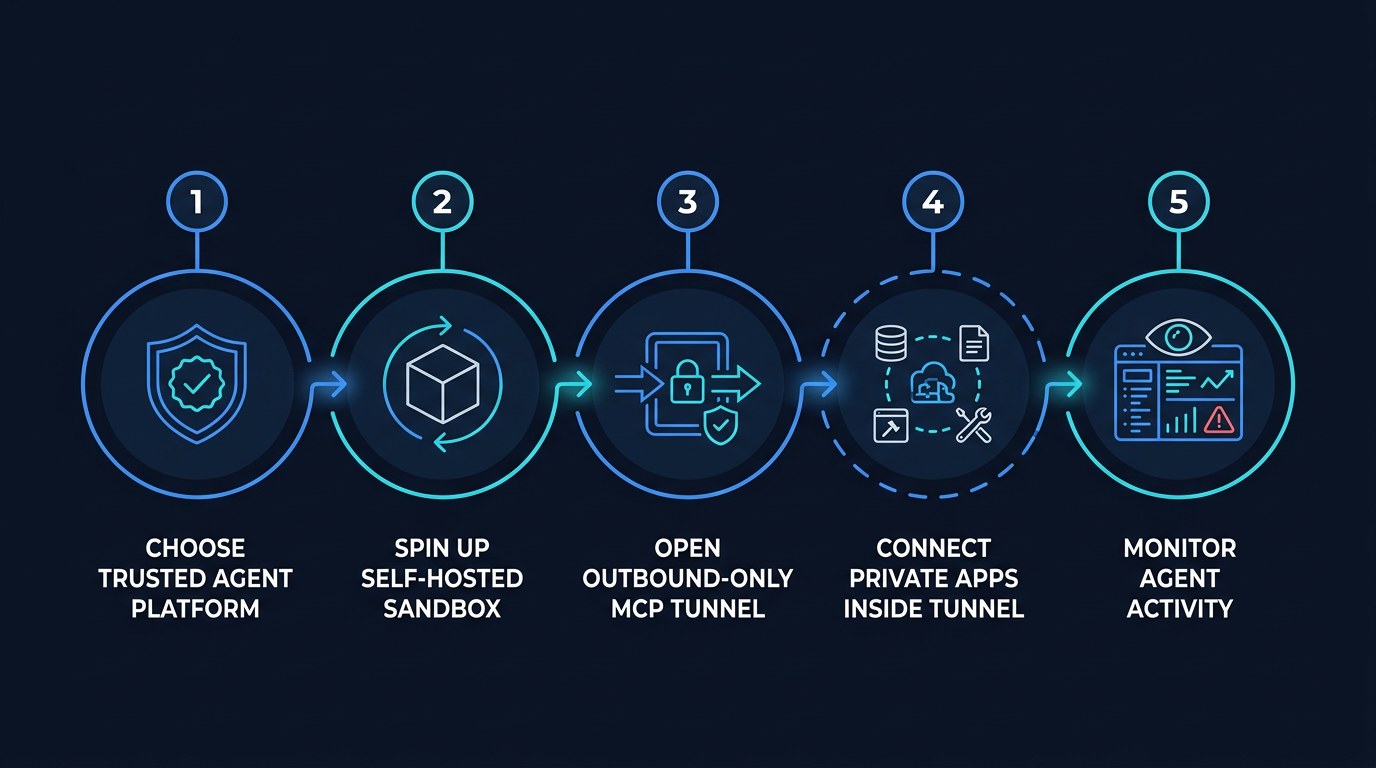
The Core Capabilities of the May 19 Claude Agents Update
For most of 2025, "running AI agents" meant one of two things. Either you trusted a hosted platform with your data and hoped its security held up, or you stitched together an open-source agent stack like n8n 2.0 and managed everything yourself. The middle ground was thin. Anthropic's May 19 update closes a lot of that gap, and according to coverage at SD Times and broader agentic AI news trackers, it lands in the middle of a 2026 trend where governance is starting to matter more than raw model power.
What Self-Hosted Sandboxes Actually Do
A sandbox in this context is the isolated compute environment where your AI agent runs the tools you give it. If the agent calls a "send email" tool, the sandbox is where that code actually executes. Up until May, that execution happened on Anthropic's infrastructure. Now you can route it to your own compute.
The practical attributes:
- Sandboxes can run on Cloudflare, Daytona, Modal, or Vercel
- Your secrets and API keys stay on your own infrastructure
- Anthropic only sees the agent reasoning, not the underlying tool outputs
- You can use a partner provider in minutes instead of building it from scratch
- Pricing is split between Anthropic tokens and your partner compute bill
This matters for solopreneurs because the most useful agents are the ones that touch real systems — your billing, your CRM, your client folders. With self-hosted sandboxes, that tool execution sits inside an environment you control. If you ever need to prove to a client that their data did not leave a vendor you do not have a contract with, you can.
What MCP Tunnels Change About Private-Tool Access
MCP — the Model Context Protocol — is the standard most major AI platforms now use to let an agent call external tools. The problem is that most MCP servers either live on the public internet (risky) or require punching holes in your firewall (also risky). MCP tunnels solve this with an outbound-only encrypted gateway: your private MCP server reaches out to Anthropic, instead of Anthropic reaching in.
The current landscape is moving fast. In 2026, every serious AI platform either supports MCP natively or has shipped its own clone. The practical benefit for a solopreneur is that you can run a tiny MCP server on your laptop, your home server, or a cheap cloud VM, expose your private Notion or Airtable to a Claude agent through the tunnel, and the agent works as if it were native — but no one outside the tunnel sees the data. The connection is encrypted end-to-end and the tunnel only carries traffic you have explicitly approved.
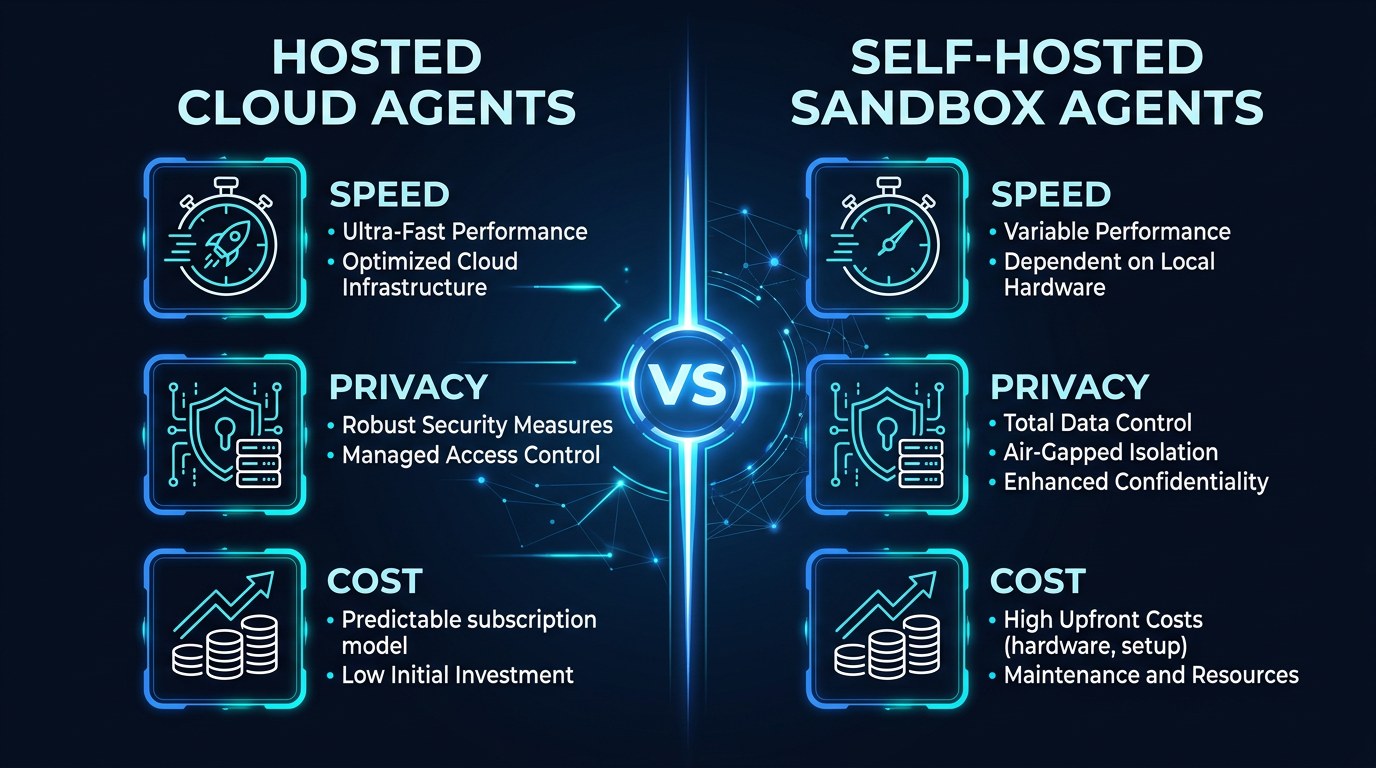
How to Choose the Right AI Agent Setup for Your Business
Most solopreneurs do not need to pick one option for everything. The right move is to match the setup to the sensitivity of the data the agent will touch. Here is a quick comparison of the four main paths in 2026.
| Setup | Key Quality | Strengths | Best For | |---|---|---|---| | Hosted Claude Agents (default) | Zero setup | Fastest to deploy, lowest cost, fully managed | Public-data tasks, drafting, research | | Claude Agents + Self-Hosted Sandbox | Data sovereignty | Tool execution stays in your environment | Client work, billing, CRM actions | | Claude Agents + MCP Tunnel | Private-tool access | Agents reach internal apps without exposing them | Connecting Notion, Airtable, internal DBs | | Self-Hosted n8n or LangChain | Full control | Code-level control, no per-agent fees | Power users, multi-step internal workflows |
For most one-person businesses, the best single choice today is Claude Managed Agents with a self-hosted sandbox on Vercel or Cloudflare and one MCP tunnel pointed at the private tool you use most. That gives you the polish of a managed agent platform and the privacy of a self-hosted stack, without forcing you to become a DevOps engineer.
Pricing Anxiety: 4 Practical Tips for Keeping Agent Costs Sane
If you are worried about runaway token bills the moment you give an agent autonomy, that fear is reasonable. Most solopreneurs who burn money on agents do it in the first 72 hours. A few simple guardrails fix almost all of it:
- Cap each agent run at a hard token budget — for most workflows, 50,000 input tokens and 10,000 output tokens per run is plenty.
- Use Claude Haiku 4.5 for routing and triage steps; reserve Sonnet or Opus for the actual reasoning step that needs it.
- Set a daily spend alert at $5 for your first two weeks. If you hit it, the agent stops.
- Log every tool call to a flat file or a row in Airtable so you can audit which tools the agent is calling most often. Cut the ones it is calling unnecessarily. For a free starting point, our free tools page lists a handful of token-counting and prompt-cost spreadsheets we use ourselves.
Self-Hosted Sandbox vs MCP Tunnel: Different Jobs
These two features get talked about together but they solve different problems. A self-hosted sandbox is about where the agent's tool code runs. An MCP tunnel is about where the data the agent reads lives. You can have either one without the other, and many solopreneurs will start with just the tunnel.
If your main concern is "I do not want my client's PDF contracts going through someone else's machine," you want a sandbox. If your main concern is "I want an agent that can read my private Notion database without me copy-pasting it into chat," you want a tunnel. If you want both, you can have both, and the May 19 release was built so they compose cleanly.
Secure AI Agents for Every Stage of Your Business
Not every solopreneur is at the same place, so the right starting point depends on what kind of work you are trying to offload. A few common patterns:
- Brand new to AI agents. Stick with hosted Claude Agents and public-data workflows for two weeks before adding any private connections. Get comfortable with how the agent thinks and where it gets confused.
- Already running automations in Make or Zapier. Start by adding one Claude agent that lives inside an MCP tunnel and reads from a single private app. Keep your existing Make scenarios; just point them at the agent for the reasoning step.
- Running a client services business. Self-hosted sandbox first. Anything that touches a client's account, file, or invoice should run in compute you control. Use the tunnel for client-specific data sources.
Beginner vs Advanced Setup Options
You do not need to start at the advanced tier on day one. A reasonable ladder looks like this:
- Beginner (Free or under $20/month). Hosted Claude Agents, no sandbox, no tunnel. Use it for public-data tasks like research summaries, content drafts, and inbox triage. Maximum learning, minimum risk.
- Intermediate ($20-$100/month). Hosted Claude Agents + one MCP tunnel pointed at your most-used private tool. You get private-data access without setting up your own compute yet.
- Advanced ($100+/month). Claude Managed Agents on a self-hosted Vercel or Cloudflare sandbox, with two or three MCP tunnels for the apps your agent actually needs to read. Full activity logs, hard budget caps, and a weekly review.
Customization and Workflow Integration
A major trend in 2026 is that agent setups are becoming modular instead of monolithic. You no longer need to pick a single "AI agent platform" and live with everything it lacks. You can stack a Claude reasoning core on top of a self-hosted sandbox, pipe in private data through MCP tunnels, and trigger the whole thing from your existing automation tool. Three ways to tailor the May 19 setup to your business: pick the partner compute provider you already trust, expose only the MCP tools you actually need (start with one), and route low-risk steps to Haiku 4.5 to keep your monthly bill flat.
Why This Matters for Solopreneurs Running Lean in 2026
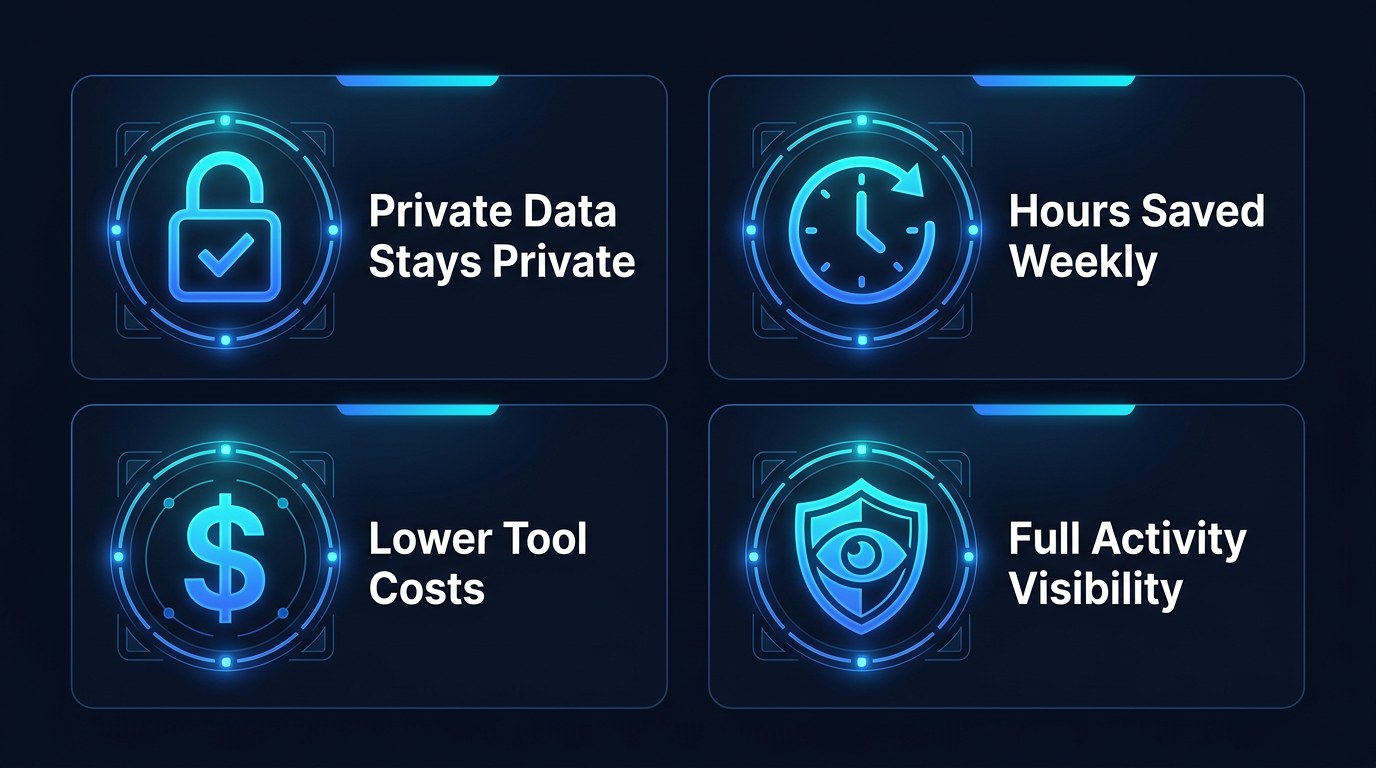
There is a real reason most solopreneurs have been slow to adopt AI agents on real work, and it is not laziness. It is that the trust math has been bad. Until recently, "give an agent the keys" meant trusting a vendor with your client's data, your billing, and your private files — and most of us were not willing to do that. The May 19 update finally gives the solopreneur audience a way to say yes without giving up control.
The concrete advantages:
- You can run AI agents on real business data without renegotiating client privacy terms
- You get the polish and reliability of a hosted platform with the privacy of a self-hosted one
- Your private data never moves through compute you do not control
- You can show a paper trail to any client who asks where their data lives
Getting the Most Out of the May 19 Update — Pro Tips
A few patterns that pay off quickly once you have the setup running:
- Pick one painful weekly job — invoice follow-ups, content repurposing, lead research — and build the agent around that single workflow before you generalize.
- Use the activity log as a teaching tool. Once a week, scan what the agent did and trim or rewrite any tool that it called incorrectly.
- Keep one human checkpoint per agent run for the first month. Have it post a summary in Slack, an email, or a row in your favorite tracker and require you to thumbs-up before any external action goes out.
- Treat MCP tunnels as least-privilege by default. Only expose the read or write surfaces the agent actually needs. If it does not need to delete, do not expose delete.
Frequently Asked Questions About Secure AI Agent Setups
How do I set up a self-hosted sandbox without being a developer?
The Vercel partner option is the most solopreneur-friendly. You create a Vercel account, click the Anthropic sandbox template, paste your Anthropic API key, and you have a working sandbox in about ten minutes. Cloudflare is a close second if you already use Cloudflare for anything else.
What private tools should I connect first through an MCP tunnel?
Start with whichever single app would save you the most time if an AI agent could read from it without you copy-pasting. A few common winners:
- Your CRM or contact list, for personalized outbound work
- Your notes app (Notion, Obsidian, Apple Notes via a third-party MCP) for context-rich drafting
- Your spreadsheet of recurring metrics or KPIs for weekly summaries
- Your invoice or billing system, read-only, for follow-up drafts
Can I use this with non-Claude models like GPT or Gemini?
The self-hosted sandbox is currently specific to Claude Managed Agents, but the MCP tunnel pattern itself is model-agnostic. OpenAI, Google, and most agent frameworks now support MCP, so the same private MCP server you build can be reused if you ever switch models — with the caveat that each platform has its own tunneling and execution story, and not all of them are as cleanly outbound-only as Anthropic's research-preview implementation.
Conclusion
The May 19 Claude Agents update is not a flashy new model release. It is something more useful for a one-person business: a clear, supported way to point an AI agent at the private parts of your business without giving up control. For solopreneurs who have been waiting for the trust math to work out, it does now. Pick one workflow, set up one sandbox, open one MCP tunnel, and let the agent earn the next one.
Start with the free AI Morning Brief at aiproductivitydaily.com/free-tools — a daily digest of what is moving in AI, filtered for solopreneurs.
One AI workflow, every weekday.
Tutorials, tool reviews, and automation playbooks for solopreneurs running on AI. Short, useful, and free. Unsubscribe anytime.
No pitch. No upsell. One quick AI workflow per weekday.