
The AI Agent That Gets Smarter Every Session: What Hermes Reaching #1 on OpenRouter Means for Solopreneurs
What Every Solopreneur Needs to Know About Self-Improving AI Agents
A self-improving AI agent just knocked the reigning champion off the top spot on OpenRouter's global rankings - not by connecting to more apps, but by remembering your work and building on it.
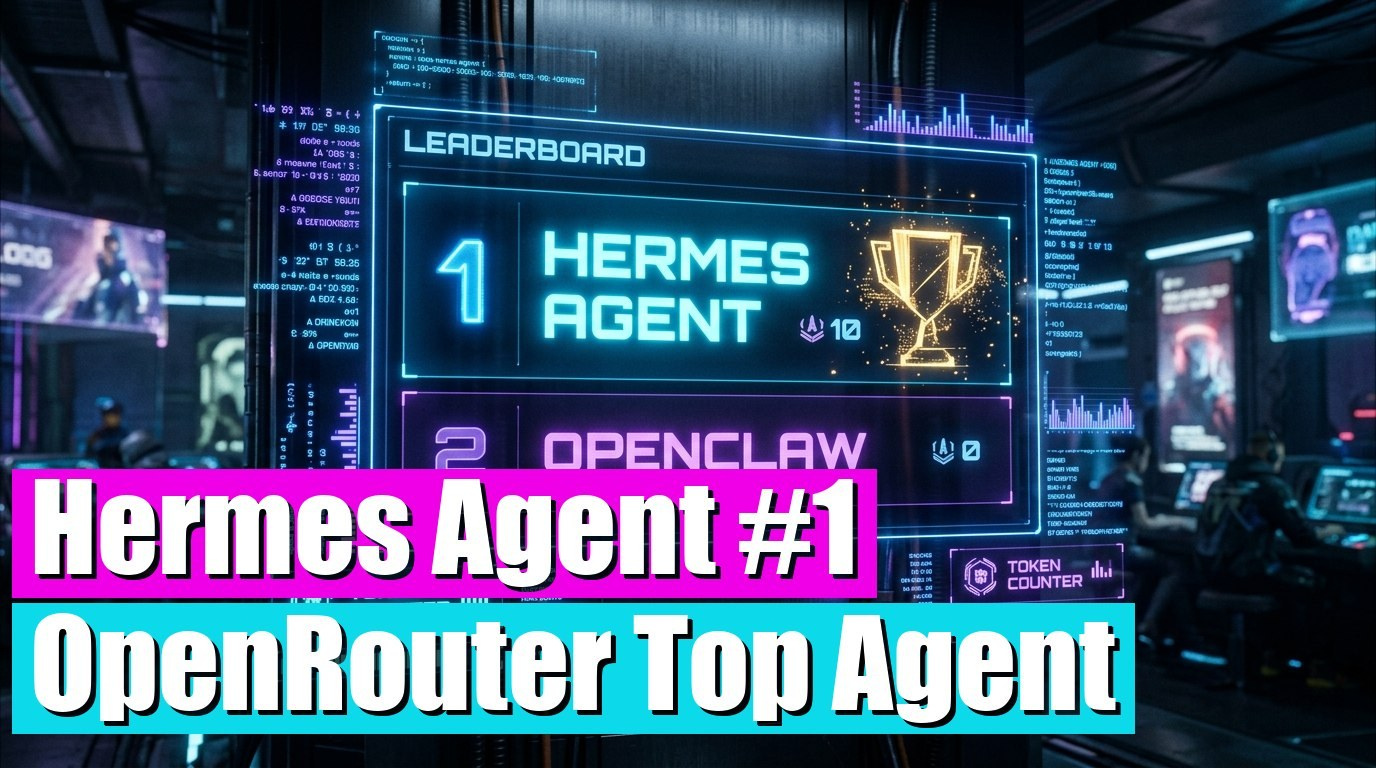
Hermes Agent, built by Nous Research, hit 224 billion daily tokens processed on OpenRouter this week, beating OpenClaw's 186 billion. The gap comes down to a single design bet: memory over reach.
Here's what this post covers:
- What Hermes Agent is and why it just hit #1
- How self-improving agents differ from standard AI tools
- What OpenRouter is and why it matters for solopreneurs
- How memory-based AI agents can change your daily workflow
- How to decide whether an agent like Hermes belongs in your stack
- What the Hermes vs. OpenClaw competition signals about where AI tools are heading
The stakes here are higher than one leaderboard ranking. The question for solopreneurs is this: should your AI tools be getting smarter from your own sessions - and if so, how do you get there?
AI Productivity Daily has tracked the open-source AI agent landscape throughout 2026, including OpenRouter's emerging role as the primary deployment layer for independent agents. In this breakdown, I'll explain what self-improving agents mean in practice, how to evaluate whether Hermes fits your workflow, and what this moment signals about where business AI is heading.
The Current Landscape of AI Agents on OpenRouter
OpenRouter has quietly become the backbone of the open-source AI agent economy. It's a unified API layer that lets developers deploy and compare AI models from dozens of providers - Anthropic, Mistral, Meta, and dozens more - through a single interface. Think of it as a clearinghouse for AI models, where usage volume is a real-time signal of what's actually working in the wild.
In 2026, OpenRouter's rankings have become a reliable proxy for which AI agents are gaining real traction with developers and power users. The current top tier is no longer dominated by a single model - it's increasingly shaped by autonomous agents that can execute multi-step tasks, and the ranking war is heating up.
According to MarkTechPost, Hermes reached its #1 position after a six-week surge that started when it began trending on GitHub. The jump from viral open-source project to top of the OpenRouter global rankings is a pattern we're seeing repeat itself in 2026: tools that solve a real workflow problem get adopted fast, and usage data doesn't lie.
What Makes Hermes Agent Different: Memory-First Design
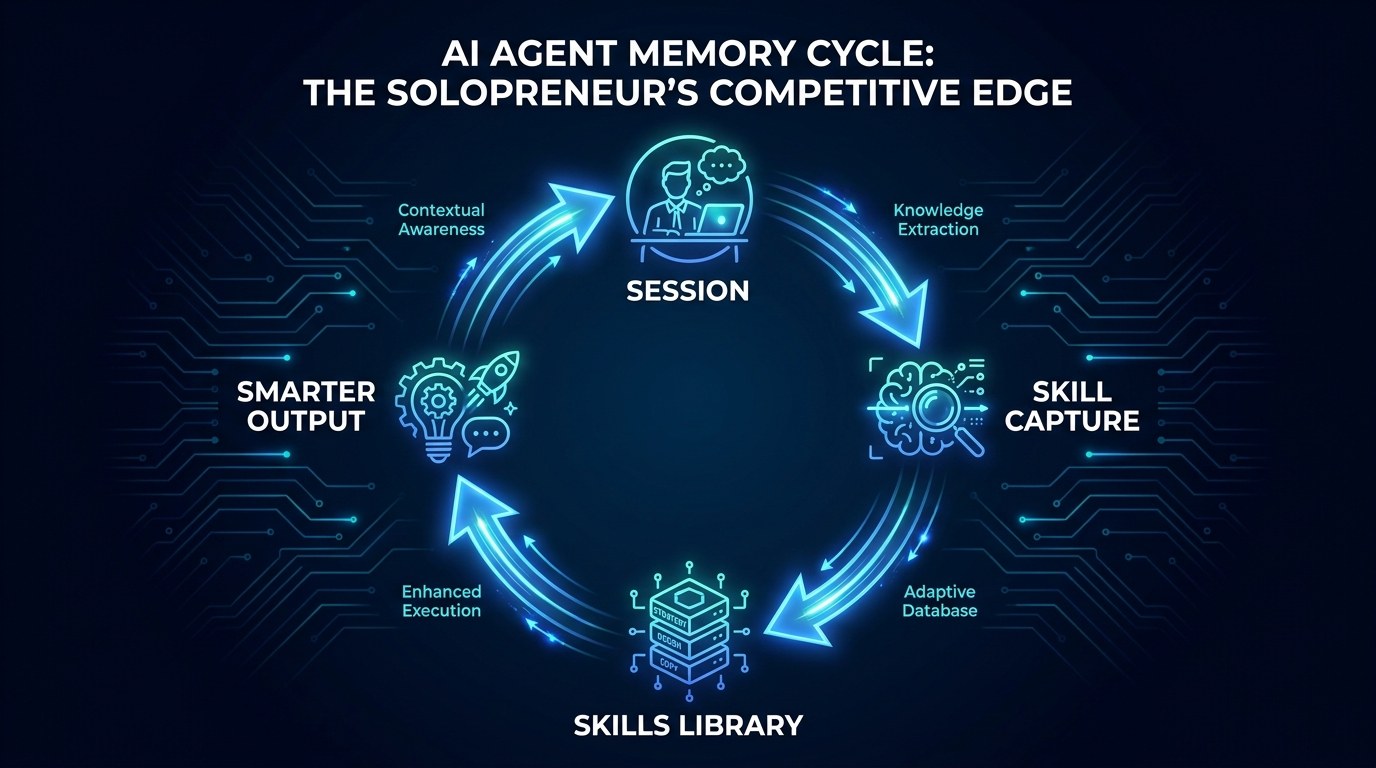
Hermes Agent is built by Nous Research with a core design principle that sets it apart from most AI tools: it auto-generates skills from your past sessions. Every time you use it, it identifies patterns in how you work, builds reusable skills from those patterns, and applies them in future sessions.
In practical terms, that means:
- Hermes doesn't require you to re-explain your workflow every time you open a new chat
- Skills it learns from one task can carry over to different, related tasks automatically
- The longer you run it, the more accurately it can predict what you need and how you want it done
- If you work in a specific niche (say, client proposals or social content), Hermes builds expertise in your exact style over time
For a solopreneur, this is significant. Most AI tools reset every session. You're always the person remembering the context - what you told it last time, what format you prefer, what your client's name is. Hermes flips that burden.
What OpenClaw Brings: Breadth and Integration
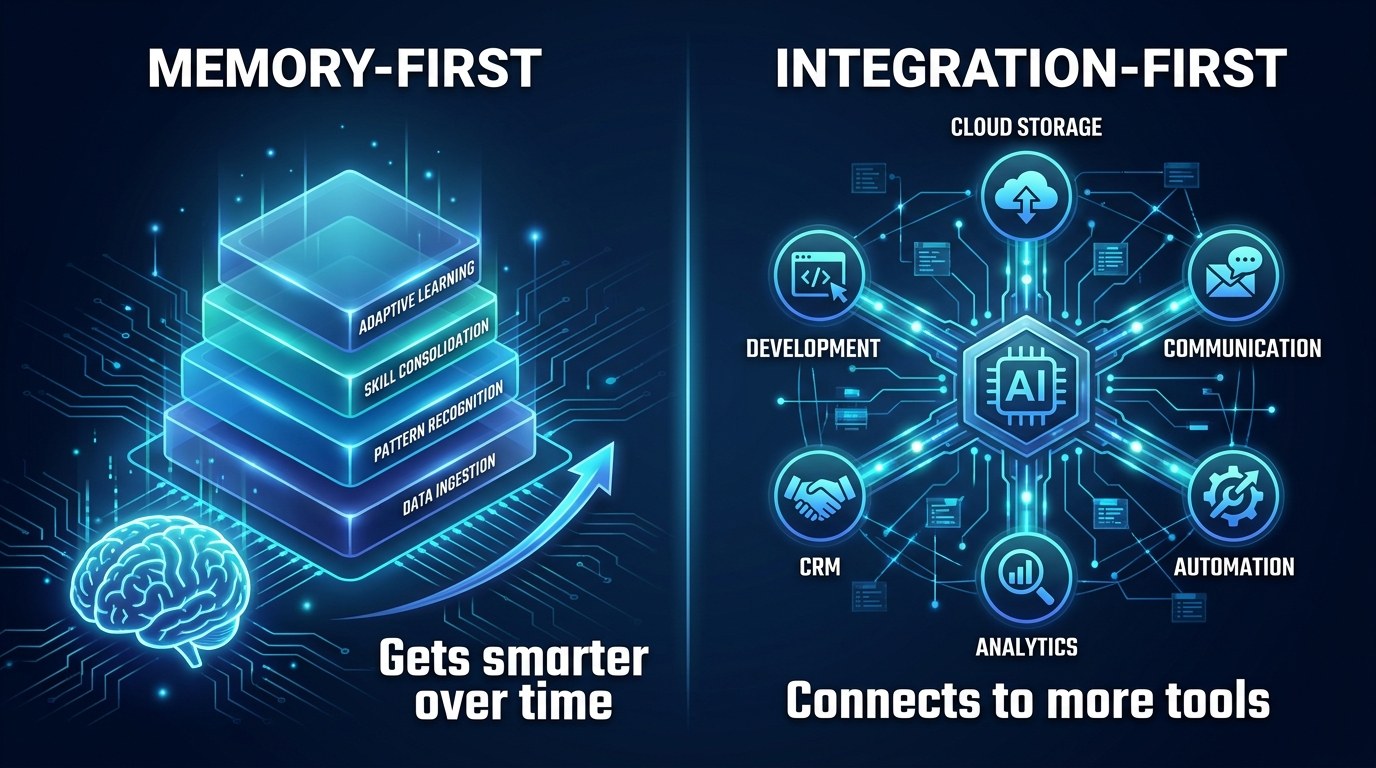
OpenClaw - the previous #1 agent on OpenRouter - takes the opposite approach. Rather than building a deep memory of your sessions, it connects horizontally: 50+ chat apps, task managers, email clients, and productivity tools. It's an integration-first agent designed to coordinate across your existing stack.
OpenClaw's strength is its surface area. If you already use a specific set of tools and want an agent that can coordinate across all of them out of the box, OpenClaw excels. The agent can pull context from Slack, summarize your email threads, and push tasks to Notion - all without you manually switching between apps.
The tradeoff is that it doesn't learn how you work. It just connects to where you work.
How to Choose the Right AI Agent for Your Solopreneur Stack
The Hermes vs. OpenClaw dynamic maps onto a broader question for solopreneurs: do you need an agent that gets smarter about you, or one that connects to more of your tools?
Here's how the current options stack up:
| Agent | Core Strength | Best For | Limitation | |---|---|---|---| | Hermes Agent | Session memory, auto-skill generation | Repetitive creative or analytical workflows | Narrower integrations than OpenClaw | | OpenClaw | 50+ app integrations, breadth | Coordination-heavy, multi-tool solopreneurs | No persistent memory of your preferences | | Claude (Anthropic) | Complex reasoning, long context | Research, writing, strategy | Best through an interface, not a full agent | | ChatGPT (OpenAI) | Broad capability, widespread support | General use, client-facing tasks | Memory features still limited in free tier | | Custom n8n/Make agents | Full control, workflow automation | Technical solopreneurs with specific needs | Requires setup time and maintenance |
The honest expert take: If you do the same type of work every day - writing proposals, creating content, reviewing client deliverables - Hermes' memory-first design will compound faster for you than a tool with more integrations. If your biggest headache is context-switching across a dozen apps, OpenClaw still has the edge on raw connectivity.
Managing the "Which Agent Do I Even Use?" Problem - Practical Tips
The agent landscape in 2026 has become genuinely confusing. Here's how to cut through it:
- Audit one week of your own sessions. Before picking an agent, spend a week noting which tasks you repeat most. If the answer is "content drafts" or "proposal templates," you want memory. If it's "pulling data from 5 different tools," you want integrations.
- Test on your most repetitive task first. Don't evaluate an agent on a one-off project. Test it on the task you do at least 3 times per week for 2 weeks - that's where compounding memory pays off.
- OpenRouter is your evaluation environment. Both Hermes and competing agents are accessible through OpenRouter. You can compare real performance and usage data before committing to any setup. aiproductivitydaily.com/free-tools includes a guide on getting started.
- Don't stack agents before you've mastered one. Solopreneurs who run 3 AI agents simultaneously often get worse output than those who run one well. Pick the agent that fits your dominant workflow and learn its limits before adding more.
Memory-First vs. Integration-First - Understanding the Difference
A memory-first agent treats your sessions as training data for itself. It learns your patterns, builds skills from them, and applies those skills without you asking. The agent is the intelligence layer that gets sharper over time.
An integration-first agent treats your tools as its training data. It learns the structure of your stack - which apps you use, how they connect, what data lives where - and coordinates between them. The workflow is the intelligence layer; the agent is the orchestrator.
These aren't mutually exclusive forever, but they represent two different philosophies about where AI value compounds: in the human-AI relationship (memory) or in the tool-to-tool coordination (integration).
Self-Improving AI Agents for Every Stage of Your Business
Self-improving agents like Hermes aren't just for technical users or power users. The value proposition scales well across different solopreneur stages:
- New solopreneur (0-6 months in): You're still figuring out your workflow. A memory-based agent can actually help you codify your process faster - it identifies what you repeat, which tells you what's worth systemizing.
- Growing solopreneur (6 months - 2 years): You have established workflows but limited time. Hermes-style skill generation means you stop re-explaining context and start getting first drafts that actually match your style.
- Scaling solopreneur (2+ years, looking to hire or automate): Self-improving agents can serve as a documentation layer. The skills Hermes generates represent your actual working preferences - useful input if you're eventually onboarding a team member or building more formal SOPs.
Beginner vs. Advanced Options for AI Agents
There's a meaningful difference between how you'd engage with Hermes (or any AI agent) depending on your current setup:
- Beginner: Start with OpenRouter's interface directly. Run Hermes on a single, well-defined task - proposal drafts, blog outlines, client emails - for 2 weeks. You don't need any technical setup. See how the skill generation changes what it outputs by week 2 versus day 1.
- Intermediate: Connect Hermes through the OpenRouter API to your preferred writing or productivity tool. At this level, you're starting to automate the prompt itself - Hermes executes, you review. Time saved per week typically jumps from 2-3 hours to 5-8 hours at this stage.
- Advanced: Build a lightweight agent loop using n8n or Make that triggers Hermes sessions based on events (new client inquiry, content publish date, invoice send). At this level, Hermes is less a tool you open and more a system that runs behind your business.
Customization and Workflow Integration in 2026
The 2026 shift in AI agents is away from "use this tool" and toward "wire this agent into how you already work." A few patterns that are working well for solopreneurs right now:
- Trigger-based Hermes sessions: Use a simple automation (Zapier, Make, or n8n) to trigger a Hermes session whenever a specific event occurs - new client form submission, calendar event with "prep" in the name, or a recurring Monday morning workflow kickoff.
- Parallel agent evaluation: Run Hermes and OpenClaw on the same task for two weeks. Let your own usage data tell you which one saves more time - not reviews, not leaderboards.
- Session journaling: Some solopreneurs are capturing Hermes' generated skills manually and adding them to their own SOPs. The skills the agent generates often reflect working preferences the solopreneur hadn't consciously articulated before.
Why This Matters for Solopreneurs Running Lean in 2026
There's a reasonable hesitation here: AI agent rankings feel like something for developers, not business owners. OpenRouter sounds technical. Hermes Agent sounds like a lab experiment.
The honest reframe is this: the leaderboard is a signal, not a product recommendation. What it tells you is that the market has tested memory-first design against integration-first design at scale, and memory is winning right now. That's a meaningful signal about where AI tool value is actually compounding for users in the real world.
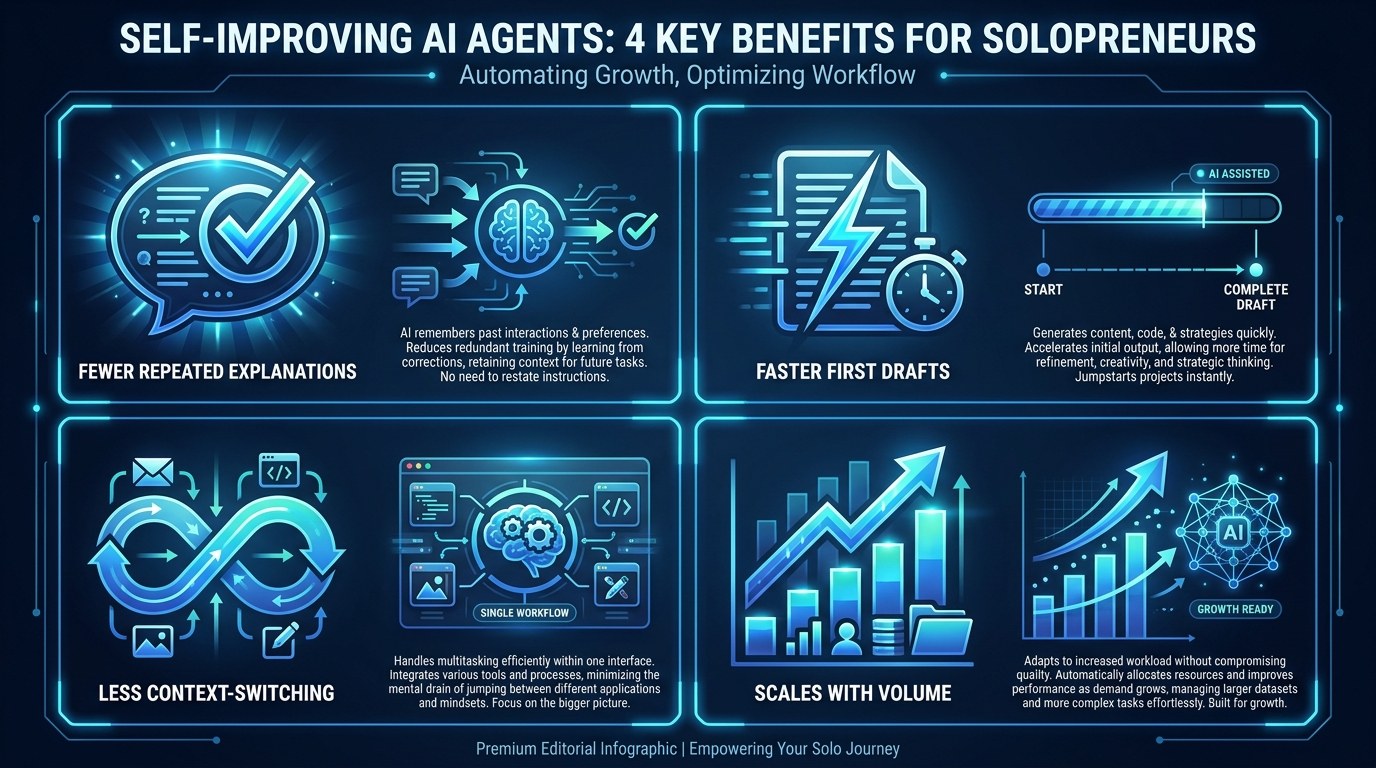
For solopreneurs specifically, the advantages of a self-improving agent map onto real business problems:
- Fewer repeated explanations - the agent learns your client personas, your tone, your format preferences
- Faster first drafts - skills built from past sessions mean earlier outputs that match your standard
- Reduced context-switching overhead - less time re-priming an AI tool before each task
- A system that scales with your volume - the more you use it, the less setup you do per session
Getting the Most Out of Self-Improving AI Agents
If you're going to test Hermes or any memory-based agent, here's how to get real signal fast:
- Start with your highest-frequency task. The memory advantage only compounds if you use it repeatedly. Pick the one thing you do most often and run only that for the first two weeks.
- Document the skill drift. After one week, ask the agent to describe how it would approach your task. After two weeks, ask again. The difference in specificity is your ROI signal.
- Don't override everything. Memory-based agents need some consistency to learn. If you radically change your instructions every session, you're not letting the skill generation run. Give it room to build patterns before you refine.
- Treat it like onboarding a contractor. The first month with a self-improving agent is an investment, not an immediate payoff. Set the expectation that you're training it, not just using it.
For a broader look at how to integrate AI agents into your daily workflow without getting buried in setup, the AI Morning Brief at aiproductivitydaily.com/free-tools breaks down what's actually moving in AI - filtered for solopreneurs who need signal, not noise.
Frequently Asked Questions About Self-Improving AI Agents
How does Hermes Agent actually learn from my sessions?
Hermes uses a skill-generation layer that identifies recurring patterns across your sessions - task types, preferred formats, tone, scope of instructions - and packages those patterns into reusable skills that carry forward into future sessions automatically. You don't manually create the skills; the agent builds them from how you actually work. By week two of consistent use, most users report noticeably faster first-draft quality and fewer prompt corrections needed.
Do I need technical knowledge to use Hermes on OpenRouter?
No technical background is required to get started. OpenRouter provides a web interface where you can run Hermes directly - no API keys, no code, no setup. To get started, create a free account at openrouter.ai, select Hermes Agent from the model list, and start with the task you do most frequently. The skill generation happens in the background; you interact with it like any other chat interface. More advanced integrations (API calls, automations, agent loops) do require some technical setup, but those are optional enhancements, not prerequisites for seeing value.
Can I use Hermes Agent alongside the AI tools I already pay for?
Yes - OpenRouter sits as a layer above your existing tools, not a replacement for them. Many solopreneurs use Hermes for session-specific tasks (content drafts, client proposals, analytical briefs) while keeping their other AI tools for different use cases (ChatGPT for client-facing conversations, Claude for long-context research, Notion AI for in-document work). The key is defining which tasks belong to which tool - without that clarity, you'll have three agents giving you three slightly different answers to the same question.
Conclusion
Hermes Agent hitting #1 on OpenRouter isn't just a leaderboard story. It's a market signal: at scale, users are choosing memory over reach. They'd rather have an agent that knows how they work than one that connects to every tool they own.
For solopreneurs running lean, that's a meaningful shift. The best AI tools aren't the ones with the longest feature list - they're the ones that reduce the overhead of using them. An agent that remembers your clients, your format, your preferences, and your workflow style is one that costs you less time every session, not more.
The compounding math works in your favor if you let it.
Start with the free AI Morning Brief at aiproductivitydaily.com/free-tools - a daily digest of what's moving in AI, filtered for solopreneurs who want signal without the noise.
One AI workflow, every weekday.
Tutorials, tool reviews, and automation playbooks for solopreneurs running on AI. Short, useful, and free. Unsubscribe anytime.
No pitch. No upsell. One quick AI workflow per weekday.